This is an old revision of the document!
Sony PlayStation 3
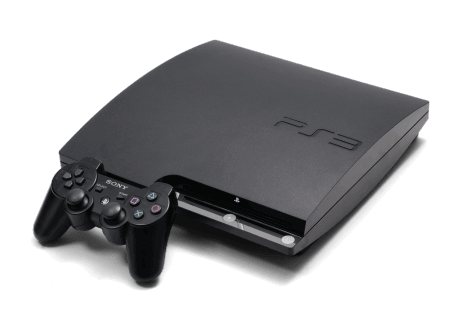
The PlayStation 3 is a home console developed by Sony. It was released in 2006.
This system scrapes metadata for the ps3 group and loads the ps3 set from the currently selected theme, if available.
PS3 emulation is available on Batocera PC x86_64 only (i.e. not on Raspberry Pi, Odroid or other SBCs).
Quick reference
- Emulator: rpcs3
- Folder:
/userdata/roms/ps3 - Accepted ROM formats:
.ps3.psn.squashfs
BIOS
The latest PlayStation 3 firmware `PS3UPDAT.PUP` should be placed into the `bios` folder on the userdata. Sony distributes this firmware on their website for installing onto your PlayStation 3; no link can be provided but it's easy enough to find by using a search engine.
ROMs
More info about ROMs to come.
- Accepted ROM formats:
.ps3.psn.squashfs
Place your Sony Playstation 3 ROMs in /userdata/roms/ps3.
Emulators
RPCS3
RPCS3 configuration
Standardized features available to all cores of this emulator: ps3.videomode
ES setting name batocera.conf key | Description » ES option key value |
|---|---|
GRAPHICAL USER INTERFACE ps3.gui | Display the user interface » Off 0, On 1. |
GRAPHICS BACKEND ps3.gfxbackend | Choose your graphics rendering » OpenGL OpenGL, Vulkan Vulkan. |
First RPCS3 run
The emulator we use is RPCS3, the PS3 opensource emulator. It requires more resources than older systems, in particular you need a decent CPU with a Vulkan-compatible GPU for hardware acceleration. You won't run games correctly if you don't have GPU acceleration, please refer to RPCS3 hardware recommendations on their website.
On Batocera 29, for the first run, you need to manually install the firmware into RPCS3. In order to do so, you need to launch the File browser from [F1] when you are on the main systems menu, go to Applications and run the application rpcs3-config.
When you are on the RPCS3 configuration tool, go to the File menu and select Install firmware. The firmware file you need to provide is the one installed above. It's located in /userdata/bios/PS3UPDAT.PUP on the Batocera Linux file system. The install of the PlayStation 3 firmware will take a few minutes (“Compiling PPU modules”)… please be patient!
Run disc games
Once you have correctly installed the firmware in the previous step, you can quit the File browser ([Ctrl]+[Q]) and go in the PS3 system menu from EmulationStation.
PlayStation 3 games are installed as .ps3 directories.
On the first run of each game, RPCS3 will be compiling PPU modules again.
Run PSN games
- Install the game from pkg files in rpcs3-config
- Create a text file in
roms/ps3/with a.psnextension. The contents of the file is the game's ID - for example, Scott Pilgrim vs. the World (which won't get out of demo mode unless it's running from the proper folder) would contain NPUB30162 in the PSN file.
- Scott Pilgrim vs. the World.psn
NPUB30162
And that's it. I added an extra line to the English version of the PS3's system text to explain it.
Folder compression
From Batocera v33 and higher, you can losslessly compress PS3 game folders as SquashFS images and still have RPCS3 read them as if though they weren't compressed at all!
To do so, open up SSH and run the following commands on your already installed games:
cd /userdata/roms/ps3
mksquashfs "<game name>.<folder extension>" "<game name>.<folder extension>.squashfs"
For example:
cd /userdata/roms/ps3
mksquashfs "little big planet.ps3" "little big planet.ps3.squashfs"
It is important that you maintain the folder extension for ps3 and psn extensions respectively.
Game compatibility
You can check the latest PS3 game compatibility from the official list on RPCS3 website.
Controls
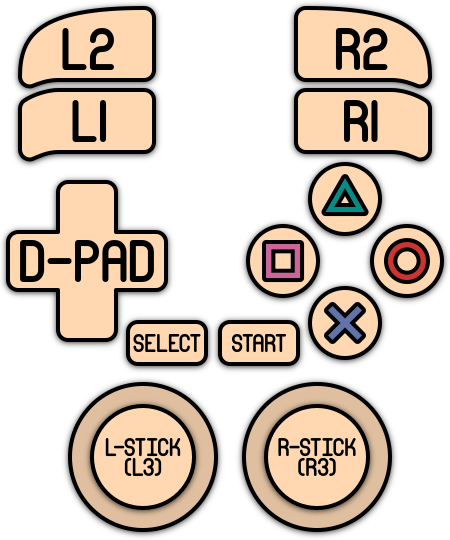
Here are the Sony Playstation 3's controls shown on a Batocera Retropad:
Troubleshooting
For further troubleshooting, refer to the generic support pages.
- systems/ps3.1637740613.txt.gz
- Last modified: 5 years ago
- by atari